
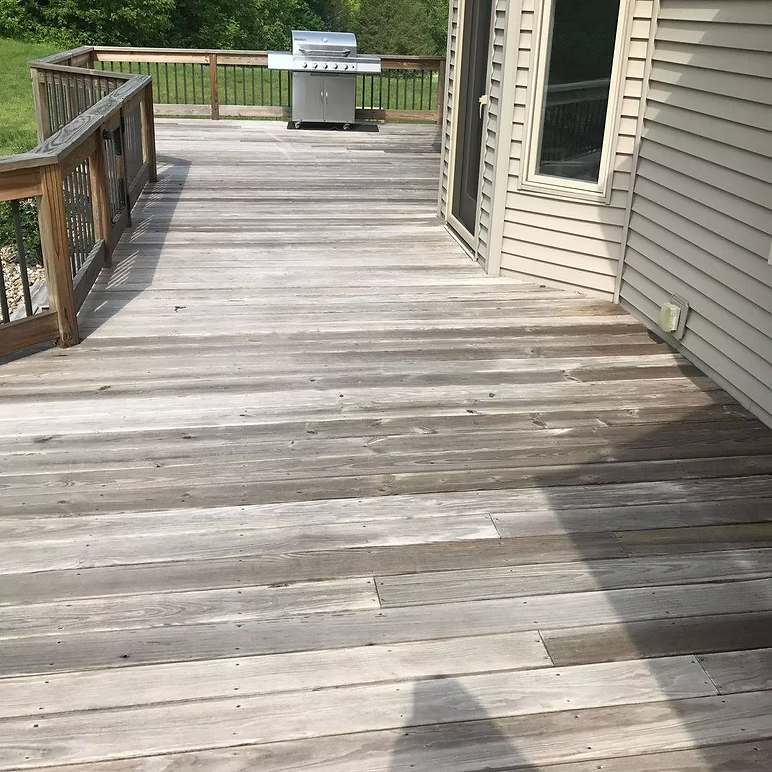
Michigan winters are tough on decks, and lakeshore decks get the worst of it: lake-effect snow, ice, wind and months of freezing and thawing. A little work in the fall can prevent cracked boards, mildew stains and peeling finish next spring. Here is how to winterize your deck in eight simple steps.
1. Clear Off Leaves and Debris
Wet leaves, pine needles and acorns trap moisture against the boards all winter, which leads to dark stains, mildew and soft spots. Sweep the deck and use a putty knife or thin tool to clear the gaps between boards so water and melting snow can drain.
2. Give It a Good Cleaning
Wash off dirt, pollen and summer grime with a cleaner made for your type of decking. Mildew that goes into winter only spreads; the U.S. EPA notes that mold grows wherever moisture is allowed to linger. Let the deck dry completely afterward.
3. Check the Finish
Sprinkle some water on the boards. If it beads up, the finish is still protecting the wood. If it soaks in and darkens the boards, the deck needs a fresh coat of stain. Most stains need dry weather and mild temperatures to cure, so in Michigan that usually means doing it in September or early October. If it is already too cold, plan to stain first thing in spring.
4. Inspect Boards, Railings and Stairs
Look for loose railings, popped nails and screws, cracked boards and soft spots. Snow load and ice make weak spots worse, and a wobbly railing or stair is a real safety risk when everything is slick. Fix what you can now and note larger repairs for spring.
5. Store or Protect Furniture and Planters
Move furniture, grills and planters off the deck or at least off the boards. Planters left in place trap water underneath and leave rings and rot. If you leave furniture out, put it on pads or feet so air can circulate.
6. Check Drainage Around the Deck
Make sure gutters and downspouts are clear and that water drains away from the deck, not onto it. Ice dams and overflowing gutters can dump water onto the same boards all winter.
7. Use the Right Snow Tools
Shovel with a plastic shovel, not metal, and push along the length of the boards rather than across them. Metal edges gouge wood and scrape off stain, especially on softer woods like cedar.
8. Skip the Rock Salt
Rock salt can damage wood fibers, discolor stain and corrode fasteners. If you need traction on deck stairs, sand is a safer choice. Check the label before using any ice melt on a wood or composite deck.
Plan Ahead for Spring
If your deck came through summer looking gray, rough or peeling, book a spring restoration now. Spring dates fill quickly along the lakeshore, and a deck that is cleaned, sanded and stained before Memorial Day is ready for the whole season. Learn more in our guide to deck sanding and staining.
Need help getting your deck ready? The Lake Deck restores decks all along the Lake Michigan shoreline, from New Buffalo to Holland. Call or text 269-292-2612 or contact us for a free estimate.